
How to Manage Builders Waste Removal in Tottenham N17 Safely?
Table of Contents
- 1. Why Builders’ Waste Builds Up So Quickly During Renovations?
- 2. The Risks of Storing Builders’ Waste Outside Your Property
- 3. Why Plasterboard Disposal Requires Special Attention?
- 4. The Hidden Problems With Skip Hire in Tottenham
- 5. Why Flexible Builders’ Waste Clearance Services Are Becoming More Popular?
- 6. Heavy Lifting and Rubble Removal Can Be Dangerous
- 7. Eco-Friendly Builders’ Waste Disposal Matters
- 8. Keep Your Renovation Project Safe and Organised
- 9. Need Renovation Rubble Removed Today?
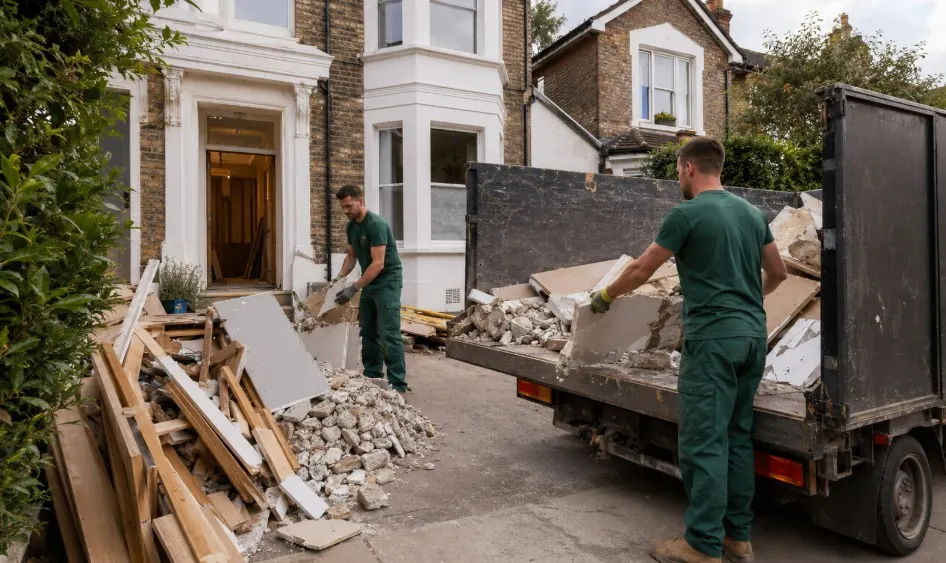
Home renovations continue to grow in popularity across Tottenham as homeowners, landlords, and property developers modernise older properties and increase market value. From open-plan kitchen extensions to loft conversions and bathroom upgrades, renovation projects are transforming homes throughout North London.
However, while choosing tiles, paint colours, and new fixtures may feel exciting, many people underestimate one of the biggest challenges involved in property renovation: managing builders’ waste safely and legally.
Heavy rubble, broken plasterboard, timber offcuts, shattered tiles, concrete debris, and packaging materials can accumulate far faster than expected.
Without a proper waste management plan, even small DIY projects can quickly create safety hazards, neighbour complaints, and expensive disposal problems.
Whether managing a full property refurbishment near White Hart Lane or carrying out weekend DIY improvements in N17, understanding how to handle renovation waste responsibly is essential.
Why Builders’ Waste Builds Up So Quickly During Renovations?
Most renovation projects generate multiple types of waste simultaneously. Once demolition begins, materials start accumulating almost immediately.
Common builders’ waste produced during home renovations includes:
| Type of Builders’ Waste | Typical Source |
|---|---|
| Concrete and rubble | Wall removals and flooring work |
| Broken tiles | Kitchens and bathrooms |
| Timber offcuts | Carpentry and structural work |
| Plasterboard | Ceiling and partition removal |
| Packaging waste | New appliances and materials |
| Old fixtures and fittings | Renovation replacements |
Many homeowners initially underestimate the sheer weight and volume involved. A relatively small bathroom renovation alone can produce dozens of heavy rubble bags within just a few days.
Without organised disposal arrangements, waste can quickly overwhelm driveways, gardens, and communal areas.
The Risks of Storing Builders’ Waste Outside Your Property
A common approach during renovations is temporarily stacking rubble and debris outside the property to free up indoor workspace. While this may seem practical at first, unmanaged waste piles can create significant problems.
In residential areas across Seven Sisters, Bruce Grove, and Turnpike Lane, overflowing construction debris can quickly attract unwanted attention from neighbours and local authorities.
The table below outlines the most common risks associated with unmanaged builders’ waste.
| Builders’ Waste Risk | Potential Consequence |
|---|---|
| Sharp materials and rubble | Injury hazards for children and pedestrians |
| Dust and debris spread | Neighbour complaints |
| Pest attraction | Rodent infestations |
| Blocked pathways | Accessibility issues |
| Unauthorised dumping concerns | Fly-tipping investigations |
A Tottenham homeowner recently described the issue clearly:
“We thought stacking rubble bags in the front garden for a few days would be harmless, but the waste built up far faster than expected. Neighbours started complaining before the project was even halfway finished.”
Keeping waste controlled throughout the renovation process helps maintain safer working conditions while reducing stress for everyone nearby.
Why Plasterboard Disposal Requires Special Attention?
Many residents are unaware that plasterboard disposal is regulated separately from general mixed construction waste. Plasterboard contains gypsum, which can release harmful gases when mixed with biodegradable waste in landfill environments.
Because of this, UK waste regulations require plasterboard to be separated and processed correctly. Improper disposal may create environmental risks and potential compliance issues.
Professional builders’ waste teams typically separate plasterboard from general rubble to ensure safe recycling and lawful disposal procedures.
The table below explains why specialist handling matters:
| Plasterboard Disposal Issue | Why It Is Important |
|---|---|
| Gypsum content | Can release harmful gases |
| Landfill restrictions | Cannot be mixed with general waste |
| Environmental compliance | Requires controlled recycling |
| Legal disposal obligations | Must use licensed waste handling |
For renovation projects involving ceilings, partition walls, or insulation work, plasterboard waste often becomes a significant part of the overall clearance volume.
The Hidden Problems With Skip Hire in Tottenham
Traditional skip hire remains a popular option for larger renovation projects, but many Tottenham residents discover the process is far more complicated than expected.
In dense urban areas across North London, skips placed on public roads often require official council permits. Controlled Parking Zones (CPZs) may also involve parking suspension charges and strict placement conditions. These additional costs can increase renovation budgets considerably.
Common skip hire challenges include:
- Waiting for permit approval
- Limited street placement options
- Parking suspension costs
- Neighbour access complaints
- Overfilling restrictions
- Permit delays affecting project schedules
A property developer working in Tottenham recently explained:
“The actual skip cost seemed reasonable at first, but once permits and parking suspensions were added, the total became far more expensive than expected.”
For homeowners without large private driveways, these logistical complications can become a major frustration during renovations.
Why Flexible Builders’ Waste Clearance Services Are Becoming More Popular?

Many North London homeowners now choose flexible builders’ waste collection services instead of traditional skips.
Rather than leaving a container outside the property for days or weeks, professional clearance teams arrive with large waste vehicles, load the debris directly, and remove everything immediately.
This approach offers several advantages for renovation projects.
| Flexible Clearance Benefit | Advantage for Homeowners |
|---|---|
| No council permits needed | Faster project progression |
| Immediate waste removal | Cleaner worksite |
| Labour included | No heavy lifting required |
| Pay for actual waste volume | Better cost efficiency |
| Faster turnaround times | Reduced disruption |
This system is particularly useful for smaller renovations, phased refurbishments, or projects with limited outdoor space.
Heavy Lifting and Rubble Removal Can Be Dangerous
Builders’ waste is often far heavier than people expect. Concrete slabs, broken tiles, timber beams, and rubble bags can quickly become difficult and unsafe to move without proper equipment.
Lifting injuries are common during DIY renovation projects, especially when homeowners attempt to carry heavy materials down staircases or through narrow hallways.
Professional waste clearance teams are trained to handle:
- Heavy rubble sacks
- Concrete debris
- Bathroom strip-outs
- Kitchen removal waste
- Timber disposal
- Multi-floor property access
This significantly reduces physical strain while helping projects progress more efficiently.
Eco-Friendly Builders’ Waste Disposal Matters
Sustainable construction and responsible waste disposal are becoming increasingly important across the UK property sector. Professional waste carriers often sort collected builders’ waste into separate recycling streams including:
| Recyclable Construction Material | Common Source |
|---|---|
| Metal | Pipes, fixtures, brackets |
| Timber | Stud walls and flooring |
| Hardcore rubble | Concrete and brick |
| Plasterboard | Internal walls and ceilings |
| Packaging waste | Renovation deliveries |
This reduces landfill use and supports more environmentally responsible renovation practices.
For many homeowners, responsible disposal is now an important part of completing a modern property improvement project properly.
Keep Your Renovation Project Safe and Organised

Efficient waste management plays a major role in keeping renovation projects safe, compliant, and stress-free. Whether handling a major home extension or a simple DIY refurbishment, removing waste regularly prevents clutter from disrupting progress.
Based locally in Tottenham, Rubbish Removal Tottenham provides licensed builders’ waste clearance services across the N17 area.
Their team supports homeowners, landlords, builders, and developers with:
- Rubble removal
- Plasterboard disposal
- Timber waste clearance
- Renovation debris collection
- Heavy lifting services
- Same-day builders’ waste removal
Need Renovation Rubble Removed Today?
Avoid expensive skip permits and backbreaking labour. Simply send photos of your builders’ waste through WhatsApp for a fast, transparent quote and rapid collection availability.
Call Us: 02033690030

Written by
Stan
Stan is a seasoned waste management specialist and the lead advisor for Rubbish Removal Tottenham. With an extensive background in London’s logistical landscape, he focuses on solving the unique clearance challenges faced by residents and businesses across Tottenham, Seven Sisters, and Bruce Grove.